Hair Breakage vs Hair Loss: How to Tell at Home
Hair breakage vs hair loss: four simple home checks to tell broken hairs from shed hairs, what causes each of them, and what to do about it next.

Key takeaways
- In hair breakage vs hair loss, breakage snaps the strand somewhere along its length, while hair loss pulls the whole hair out from the root.
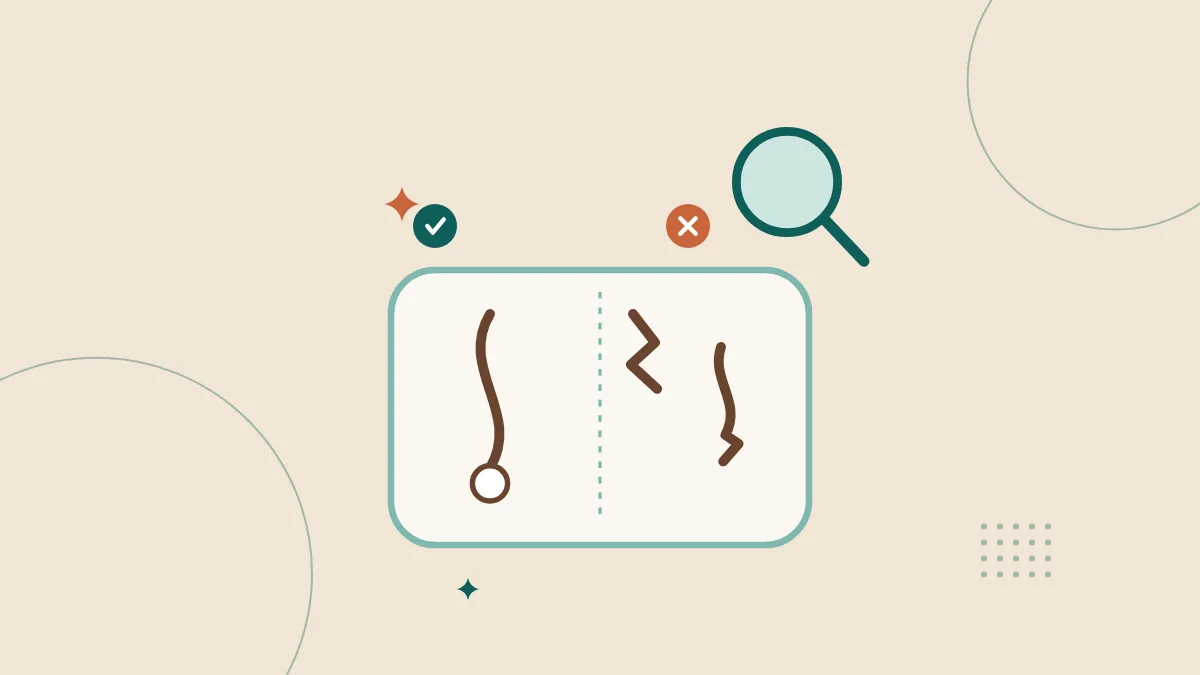
- A shed hair is full length and usually has a small white bulb at one end; a broken hair is shorter, with no bulb.
- Collect hairs for a few days and sort them by length; many short pieces point to breakage, many long hairs to shedding.
- Breakage mostly comes from handling and heat; hair loss comes from the growth cycle, hormones, genes or health.
- You can have both at once. See a dermatologist if shedding is heavy, patchy or lasts for months.
In this article
- What is the difference between hair breakage and hair loss?
- How can you tell hair breakage from hair loss at home?
- Hair breakage vs hair loss: quick comparison
- What causes hair breakage?
- What causes hair loss?
- Can you have hair breakage and hair loss at the same time?
- What should you do about each?
- When should you see a dermatologist?
- FAQ
In hair breakage vs hair loss, the difference is where the hair lets go. With breakage, the strand snaps somewhere along its length and the root stays put and keeps growing. With hair loss, the whole hair falls out from the follicle. You can usually tell them apart at home by looking closely at the hairs you find: a long hair with a small bulb at one end was shed, while a short hair with a blunt or frayed end broke.
This guide gives you four quick home checks, a comparison table, the usual causes of each and what to do next. For an overnight example, see does sleeping with wet hair cause hair loss.
What is the difference between hair breakage and hair loss?
- Hair breakage means the hair shaft is damaged and snaps. The follicle is fine, and the hair keeps growing from the root. The cause is on the hair itself: heat, friction, chemicals, tight styles or rough handling.
- Hair loss means the hair comes out at the root, either as normal shedding or because more hairs than usual are leaving the growth cycle. The cause is inside the body or scalp: hormones, genes, stress, illness, nutrition or an inflamed scalp.
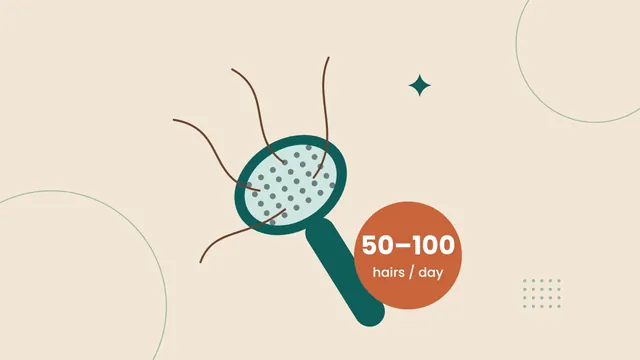
Some shedding is normal. The American Academy of Dermatology says losing 50 to 100 hairs a day is typical. Our guide on how much hair loss is normal explains the range.
How can you tell hair breakage from hair loss at home?
Check 1: Look at the end of the hair
Pick up a hair from your brush, shower drain or pillow and hold it against a white surface. A shed hair usually has a tiny white bulb at the root end. A broken hair has a blunt, uneven or frayed end at both ends and no bulb.
Check 2: Compare the lengths
Shed hairs are close to your full hair length, because they grew all the way to the end before falling. Broken hairs come in many shorter lengths, often just a few inches, because they snapped at different points.
Check 3: Collect for a few days
Save the hairs from your brush and drain for three days, then sort them into long and short piles. If most are long with bulbs, you're mainly seeing hair shedding. If most are short and bulb-free, breakage is the main issue. Use the same routine each day so the counts are comparable.
Check 4: Look at where it's thinning
Breakage often shows up at the ends, along the hairline or in sections that get the most heat or friction, with lots of short, uneven hairs sticking up. Hair loss tends to look more even: a wider part, a thinner ponytail or less density across the crown.
A gentle pull test can add a clue. Take a small section of hair between your thumb and finger and slide your hand from root to tip once, without yanking. If several hairs come out each time you try it in different areas, mention that to a dermatologist. Don't repeat it often; pulling can itself cause breakage.
Hair breakage vs hair loss: quick comparison
| Hair breakage | Hair loss | |
|---|---|---|
| Length of the hair | Many short, mixed lengths | Mostly full length |
| End of the hair | Blunt or frayed, no bulb | Small white bulb at the root end |
| Where you notice it | Ends, hairline, heat or friction zones | Whole head, wider part, thinner ponytail |
| Hair feels | Dry, rough, brittle, split ends | May feel normal, just less of it |
| Scalp | Usually normal | May look normal, or be itchy, red or smooth in patches |
| Main causes | Heat, bleach, rough handling, tight styles | Genes, hormones, stress, illness, nutrition |
| Hair regrows? | Hair keeps growing from the root | Often, once the cause is dealt with |
What causes hair breakage?
- Heat styling with dryers, straighteners and curling irons.
- Chemical treatments such as bleach, relaxers, perms and frequent coloring.
- Rough handling: brushing wet hair, towel-rubbing or tight elastics. See the AAD list of habits that damage hair.
- Dryness and weathering, which lead to split ends that travel up the strand.
- Tight hairstyles, which can break hairs at the hairline. See hairstyles that cause hair loss.
What causes hair loss?
- Pattern hair loss (androgenetic alopecia), which is genetic and gradual.
- Temporary heavy shedding after illness, surgery, childbirth, crash dieting or a big stressor, known as telogen effluvium. It often begins a few months after the trigger. See seasonal hair shedding for a related, milder pattern.
- Hormonal changes, including after pregnancy and around menopause.
- Medical issues such as thyroid problems or low iron, which a doctor can check with blood tests.
- Scalp conditions and some medicines.
Can you have hair breakage and hair loss at the same time?
Yes, and it's common. Thinning hair is more fragile, so it breaks more easily, and breakage can make already thin hair look thinner still. That's why it's worth sorting your hairs: you may need to fix your hair care routine and also see a doctor about the shedding.
What should you do about each?
If it's mostly breakage
- Lower the heat and use a heat protectant.
- Detangle gently with a wide-tooth comb, starting at the ends.
- Trim off split ends every 8 to 10 weeks.
- Use a conditioner every wash, and a gentle shampoo.
- Skip tight styles.
Our hair care tips for thinning hair and how to wash thin hair go through the daily habits in detail.
If it's mostly hair loss
- Don't panic over a short spike; some shedding settles by itself within a few months.
- Keep a simple log: how many hairs, when it started and what happened in the months before.
- Book a visit with a board-certified dermatologist if it continues, since the right treatment depends on the cause.
When should you see a dermatologist?
See a doctor if you notice:
- Heavy shedding that lasts longer than about three months.
- Bald patches, a quickly widening part or visible scalp.
- An itchy, red, scaly or painful scalp.
- Hair loss along with fatigue, weight change or other symptoms.
Hair loss has many causes, and a dermatologist can find which one you have. Home checks are only a guide.
Frequently asked questions
What is the difference between hair breakage and hair loss?
Breakage means the hair snaps along its length while the root keeps growing. Hair loss means the whole hair falls out from the follicle. Broken hairs are shorter with no bulb, and shed hairs are full length with a small white bulb.
How do I know if my hair is breaking or falling out?
Look at the ends of the hairs you find. A white bulb and a long length mean the hair was shed. Short pieces with blunt or frayed ends mean breakage. Collect hairs for a few days and sort them to see which type is more common.
Does hair grow back after breakage?
The broken piece doesn't repair itself, but the hair keeps growing from the root, so you can grow it back by reducing the damage that caused the breakage.
Can hair breakage make hair look thinner?
Yes. Many short broken hairs make the ends look sparse and the hair look less dense overall, even when the roots are healthy.
When should I see a doctor about hair loss?
See a board-certified dermatologist for heavy shedding lasting more than about three months, bald patches, a widening part or an itchy, red or painful scalp.
Sources
Health information in this article is based on the cited dermatology sources and is not a substitute for advice from a doctor. How we research.

Written by Shadush Sachiska
Shadush Sachiska is the founder and editor of 360 Hair Loss. Shadush researches every guide from dermatology sources and real-world styling advice to help readers with thinning hair look and feel their best. Shadush is not a doctor; health topics are written to help you have a better conversation with one.