Seasonal Hair Shedding: Why Your Hair Falls Out More in Autumn
Seasonal hair shedding is real: research shows more hairs enter the resting phase in summer, then fall out in autumn. Learn why it happens and when it stops.


Key takeaways
- Seasonal hair shedding is a normal pattern: many people notice more hair falling out in late summer and autumn.
- A 2009 study of 823 women found the most resting (telogen) hairs in summer, which then shed in the following weeks and months.
- It usually settles on its own within a few months as the hair cycle evens out.
- Shed hairs are replaced by new ones, so seasonal shedding doesn't cause lasting thinning.
- See a dermatologist if shedding lasts more than a few months, comes out in clumps, or leaves patches.
In this article
Seasonal hair shedding is a real and normal pattern: many people lose noticeably more hair in late summer and autumn, then see it settle down again in winter. Research has found that more hairs enter their resting phase during summer, and resting hairs fall out in the weeks and months that follow. If your brush and shower drain have looked busier since September, this is a likely reason. Here's what the research says, how long seasonal shedding lasts, and the signs that mean it's something else.
What is seasonal hair shedding?
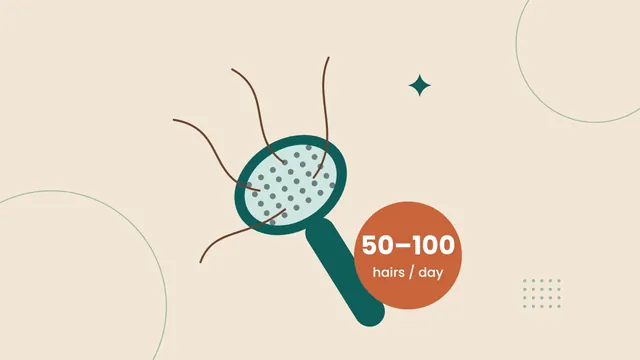
Every hair goes through a cycle: a long growing phase, a short transition, then a resting phase called telogen. At the end of the resting phase, the hair falls out and a new hair starts growing from the same follicle. Normally only a small share of your hairs are resting at any time, which is why the American Academy of Dermatology (AAD) says shedding 50 to 100 hairs a day is normal.
Seasonal shedding happens when more hairs than usual enter the resting phase at the same time of year. A few months later, those hairs fall out together, so shedding looks heavier for a while.
What the research says
The clearest evidence comes from a 2009 study in the journal Dermatology. Researchers looked at 6 years of hair tests from 823 healthy women and found a yearly cycle:
- The highest share of resting hairs was in summer.
- A smaller peak appeared in spring.
- Resting hairs were at their lowest in late winter.
Because resting hairs shed over the following weeks and months, a summer peak in resting hairs lines up with the extra shedding many people notice in late summer and autumn. The study looked at women, but men describe the same pattern, and the hair cycle works the same way.
Why does hair shed more in autumn?
Scientists don't know the exact reason. One common theory is that it's left over from our evolutionary past: like many animals, humans may hold on to more hair in summer to protect the scalp from the sun, then let it go as the season changes. Changes in daylight hours are thought to play a part, but this hasn't been proven.
What matters for you is simpler: it's a normal, temporary change in the hair cycle, not a sign that your follicles are failing.
How long does seasonal hair shedding last?
For most people, seasonal shedding is noticeable for a few weeks up to about 2 to 3 months, then gradually returns to their usual level. The hairs you lose are already being replaced by new ones growing underneath, so your hair usually looks just as full by the following spring.
If you'd like to keep an eye on it, use the same brush and washing routine every day, and take a photo of your part and hairline in the same light once a month. Comparing photos is far more reliable than counting hairs in the drain. Our guide on how much hair loss is normal explains why shower shedding often looks worse than it is.
Seasonal shedding vs. hair loss: how to tell the difference
| Seasonal shedding | Signs of something else | |
|---|---|---|
| Timing | Late summer and autumn, roughly the same time each year | Any time, or getting steadily worse |
| How long | A few weeks to about 3 months | Longer than about 3 months |
| Pattern | Spread evenly over the head | Patches, a widening part or a receding hairline |
| Amount | A bit more than usual in the brush and shower | Clumps of hair, or a ponytail that's clearly thinner |
| Scalp | Looks and feels normal | Itching, burning, redness, scaling or pain |
Other common triggers can look similar. The AAD notes that heavy shedding often starts a few months after a stressful event, an illness, a high fever, giving birth or major weight loss. If one of those happened earlier this year, it may be adding to what you see now.
What you can do during seasonal shedding
You can't stop a normal seasonal cycle, and you don't need to. You can avoid adding breakage on top of it and make your hair look fuller while it passes:
- Be gentle when washing. Shampoo your scalp, condition the ends, and blot your hair dry. See how to wash thin hair.
- Skip tight styles. Tight ponytails, buns and braids pull on the roots; read hairstyles that cause hair loss.
- Turn down the heat and brush only to style. Our hair care tips for thinning hair cover the basics.
- Eat well. A balanced diet with enough protein supports normal hair growth; very restrictive dieting can trigger extra shedding.
- Change your part. Flipping your part adds instant lift; see the best hair part for thinning hair.
- Don't panic-buy "hair loss" products. Shedding that's part of a normal cycle settles on its own.
When to see a dermatologist
Book an appointment with a board-certified dermatologist if shedding lasts longer than about 3 months, if hair comes out in clumps, if you notice bald patches or a widening part, or if your scalp itches, burns or looks red or scaly. A dermatologist can tell normal shedding apart from hair loss, and many causes of hair loss respond best when they're found early.
Frequently asked questions
Is seasonal hair shedding real?
Yes. A 2009 study of 823 healthy women in the journal Dermatology found a yearly cycle, with the most resting hairs in summer. Those hairs then shed, which is why many people notice more hair falling out in late summer and autumn.
Why does my hair fall out more in the fall?
More hairs enter their resting phase during summer, and resting hairs fall out over the following weeks and months. This makes shedding look heavier in late summer and autumn.
How long does seasonal hair shedding last?
Usually a few weeks to about 2 to 3 months. If heavy shedding lasts longer than about 3 months, see a dermatologist.
Does seasonal shedding cause permanent hair loss?
No. Seasonal shedding is part of the normal hair cycle. The hairs that fall out are replaced by new ones, so it doesn't cause lasting thinning.
Can I stop seasonal hair shedding?
You can't stop a normal seasonal cycle, but gentle washing, loose hairstyles, less heat and a balanced diet help avoid extra breakage while it passes.
Sources
Health information in this article is based on the cited dermatology sources and is not a substitute for advice from a doctor. How we research.

Written by Shadush Sachiska
Shadush Sachiska is the founder and editor of 360 Hair Loss. Shadush researches every guide from dermatology sources and real-world styling advice to help readers with thinning hair look and feel their best. Shadush is not a doctor; health topics are written to help you have a better conversation with one.