How Much Hair Loss Is Normal? Shedding vs. Hair Loss Explained
Losing 50 to 100 hairs a day is normal, say dermatologists. Learn how shedding differs from hair loss and the signs it's time to see a doctor.

Key takeaways
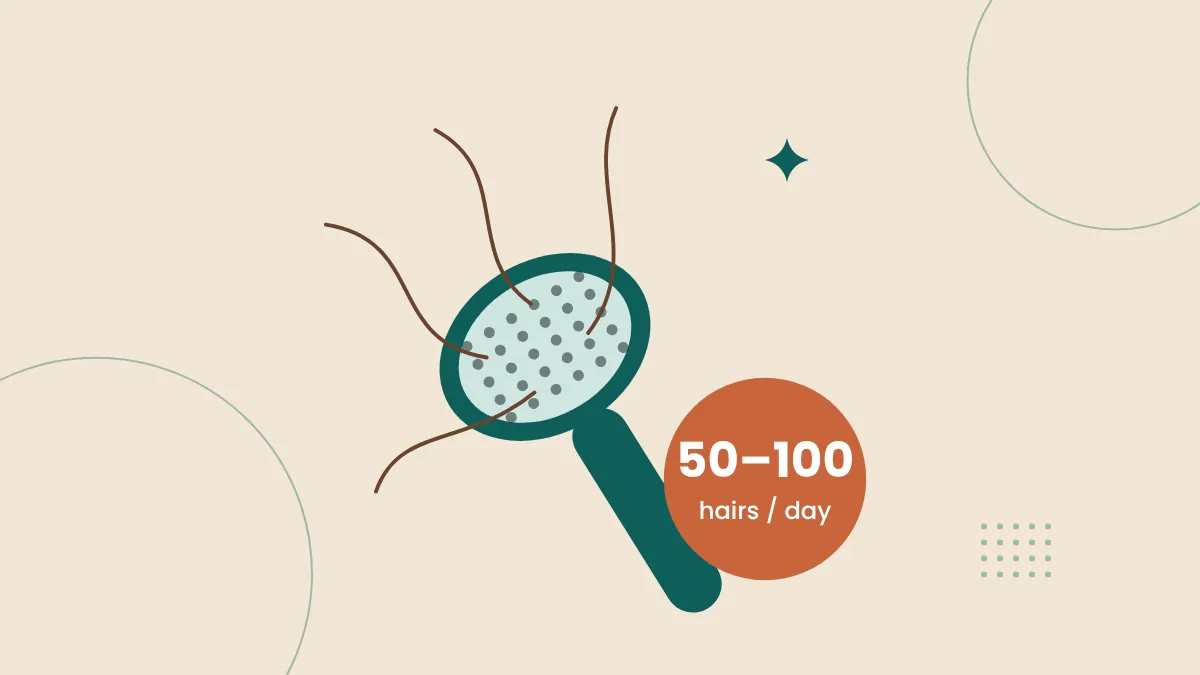
- Shedding 50 to 100 hairs a day is normal, according to the American Academy of Dermatology.
- Shedding is hair falling out as part of the growth cycle; hair loss is when something stops hair from growing back.
- Excessive shedding often follows a stressful event by a few months and usually settles on its own.
- Hair you find in the shower or brush has often been collecting since your last wash, so it can look like more than it is.
- See a dermatologist if you notice clumps, bald patches, a widening part, a receding hairline, or scalp pain or itching.
In this article
Finding hair on your pillow, in your brush or tangled around the shower drain can be alarming. But losing some hair every day is completely normal. It's part of how hair renews itself. The real question is how much is normal, and how to tell normal shedding apart from hair loss that needs attention.
The short answer: according to the American Academy of Dermatology (AAD), it's normal to shed between 50 and 100 hairs a day.
How much hair loss is normal each day?
Every hair on your head goes through a cycle. It grows for a long period (often several years), then rests, then falls out so a new hair can grow from the same follicle. Because your follicles are all at different stages of this cycle, a small number of hairs are always reaching the end of it and falling out, while new ones are starting to grow.
That's why daily shedding doesn't make your hair thinner: the hairs you lose are being replaced.
Shedding vs. hair loss: what's the difference?
Dermatologists separate these two things, and the difference matters:
| Hair shedding | Hair loss | |
|---|---|---|
| What happens | More hairs than usual fall out, but they grow back | Something stops hair from growing |
| Common triggers | Stressful events, illness, high fever, giving birth, weight loss, stopping birth control | Hereditary hair loss, tight hairstyles, harsh hair-care products, some medical conditions |
| Typical course | Often stops on its own once the body readjusts | Hair won't regrow until the cause is addressed |
The AAD describes heavy shedding after a stressful event as excessive hair shedding (doctors call it telogen effluvium). People usually notice it a few months after the event itself.
What excessive shedding looks like
When shedding is heavier than normal, you may notice:
- Noticeably more hair in your brush, on your pillow or in the drain for several weeks
- Hair coming out in larger amounts when you run your fingers through it
- Your ponytail feeling thinner, even though you don't see bald spots
A common example is after pregnancy. The AAD notes that new mothers often see heavy shedding about two months after giving birth, peaking around four months. It's normal and temporary, and hair usually regains its fullness within six to nine months.
Why it can look like more hair than it is
Several everyday things make normal shedding look worse than it is:
- Washing less often. Hairs that shed between washes stay tangled in your hair, then all come out at once in the shower. If you wash every three days, you may see three days' worth of shedding in one go.
- Long hair. A 20-inch hair in the drain looks like far more than a 2-inch one, which is one reason shedding seems more dramatic in people with long hair.
- Brushing. A brush mostly collects hairs that have already detached, so it gathers them into one visible clump.
- Breakage. Short, snapped pieces without a white bulb at the end are usually breakage, not shedding. Breakage is caused by heat, rough brushing and chemical treatments.
A simple way to check your own shedding
You can't easily count every hair you lose, but you can notice change. Try this for one or two weeks:
- Use the same brush and wash routine each day.
- Collect the hair from your brush and the shower after each wash and put it in a small labeled bag or take a photo.
- Compare over time. What matters is whether the amount is clearly more than your normal, not an exact number.
Take a photo of your part and hairline in the same spot and lighting once a month, too. Slow changes are much easier to see side by side.
When to see a dermatologist
Book an appointment with a board-certified dermatologist if you notice any of the following:
- Hair coming out in clumps, or shedding that continues for more than a few months
- Round or patchy bald spots
- A widening part or thinning at the crown
- A receding hairline that's changing quickly
- Scalp itching, burning, pain, redness or scaling
- Hair loss together with other symptoms such as tiredness, weight changes or feeling unwell
A dermatologist can tell the difference between shedding and hair loss, and many types of hair loss respond best to early treatment.
How to reduce breakage and keep hair healthy
You can't stop normal shedding (and you wouldn't want to), but you can avoid adding breakage on top of it:
- Detangle gently with a wide-tooth comb, starting at the ends.
- Avoid tight ponytails, braids and buns. The AAD lists tight hairstyles as a cause of hair loss.
- Use a heat protectant and lower heat settings on dryers and irons.
- Space out bleaching, perms and relaxers.
- Eat a balanced diet with enough protein; very restrictive dieting can trigger shedding.
For a gentle routine, see how to wash thin hair. And if you've heard that frequent haircuts make hair grow back thicker, we look at the evidence in does cutting hair make it grow thicker?
If your hair is already looking thinner, the right cut can help it look fuller while you figure out the cause. See our guides to hairstyles for thinning hair on top and haircuts for a receding hairline.
Frequently asked questions
How many hairs a day is normal to lose?
According to the American Academy of Dermatology, it is normal to shed between 50 and 100 hairs a day as part of the hair growth cycle.
Is it normal to lose a lot of hair in the shower?
Often, yes. Hairs that shed between washes stay tangled in your hair and come out together in the shower, so you may see several days' worth at once, especially if you have long hair or wash less often.
What is the difference between hair shedding and hair loss?
Shedding is when more hairs than usual fall out but grow back, often after a stressful event. Hair loss is when something stops hair from growing, such as hereditary hair loss or tight hairstyles.
Does excessive hair shedding stop on its own?
It often does. Shedding triggered by stress, illness or giving birth usually slows once the body readjusts, and hair typically regains its fullness within six to nine months. Ongoing stress can make it last longer.
When should I worry about hair loss?
See a dermatologist if you notice clumps of hair falling out, bald patches, a widening part, a quickly receding hairline, scalp pain or itching, or shedding that lasts more than a few months.
Sources
Health information in this article is based on the cited dermatology sources and is not a substitute for advice from a doctor. How we research.
Written by Shadush Sachiska
Shadush Sachiska is the founder and editor of 360 Hair Loss. Shadush researches every guide from dermatology sources and real-world styling advice to help readers with thinning hair look and feel their best. Shadush is not a doctor; health topics are written to help you have a better conversation with one.