How to Wash Thin Hair the Right Way (Without Losing Volume)
How to wash thin hair for more volume: where to put shampoo, how to condition fine hair, how often to wash, and the drying habits that stop breakage.

Key takeaways
- Put shampoo on your scalp, not the full length of your hair.
- Condition after every wash, but only on the ends if your hair is fine or straight.
- Wash as often as your scalp needs; oily scalps may need daily washing.
- Blot hair with a towel or T-shirt instead of rubbing it.
- Detangle wet hair gently with a wide-tooth comb, never a brush.
In this article
Knowing how to wash thin hair properly makes a real difference to how full it looks. The short version: apply shampoo only to your scalp, use conditioner on the ends only, rinse thoroughly, and blot your hair dry instead of rubbing it. These simple changes, which follow advice from the American Academy of Dermatology (AAD), keep fine hair light and help reduce breakage. Here's the full routine.
How to wash thin hair: step by step
- Detangle before you wet it. Gently comb through dry hair with a wide-tooth comb so it doesn't knot further in the shower.
- Use lukewarm water. Very hot water can dry the scalp and leave hair frizzy.
- Shampoo the scalp only. The AAD recommends applying shampoo to your scalp rather than the full length of your hair. Massage gently with your fingertips, not your nails. The suds that rinse down are enough to clean the lengths.
- Rinse thoroughly. Leftover shampoo weighs fine hair down and can leave it looking greasy faster.
- Condition the ends only. The AAD advises using conditioner after every shampoo, applied only to the ends if your hair is fine or straight. Keeping it off the roots keeps them lifted.
- Rinse again, finishing with slightly cooler water if you like.
- Blot, don't rub. Wrap your hair in a towel or soft T-shirt and press out the water. Rubbing roughens the hair and causes breakage.
- Let it air-dry a little before combing. Wet hair stretches and snaps more easily, so the AAD suggests letting straight hair dry a bit before you comb it.
How often should you wash thin hair?
There's no single rule. The AAD says people with straight hair and an oily scalp may need to shampoo every day, while drier, curly or textured hair can be washed less often. Fine hair tends to look flat sooner because oil from the scalp travels down each thin strand quickly, so many people with thin hair find that washing daily or every other day keeps it looking fullest.
If you go longer between washes, a little dry shampoo at the roots absorbs oil and adds grip and lift.
Choosing a shampoo for thin hair
- Look for "volumizing" or "lightweight" formulas. They tend to leave fewer heavy residues on the hair.
- Avoid very rich "moisturizing" shampoos unless your hair is also dry; they can make fine hair limp.
- Use a clarifying shampoo occasionally to remove product buildup, especially if you use dry shampoo or styling products often.
- If your scalp flakes or itches, a dandruff shampoo may help; see a dermatologist if it doesn't.
No shampoo can regrow hair, whatever the label says. Shampoo's job is to keep your scalp clean and your hair looking its best.
Conditioner tips for fine hair
- Use a small amount and keep it to the bottom few inches.
- Choose lightweight or volumizing conditioners, or a spray-in leave-in conditioner on the ends.
- If your hair is long and tangles easily, comb conditioner through the ends with a wide-tooth comb before rinsing.
Drying thin hair for volume
- Apply a little volumizing mousse to damp roots.
- Use a heat protectant before blow-drying.
- Dry your roots first, lifting them up and away from the scalp, and use a medium heat setting.
- Flip your part to the opposite side while drying, then flip it back. This instantly adds lift.
The right cut helps too: see hairstyles for women with thinning hair on top and hairstyles for men with thinning hair.
Common mistakes when washing thin hair
- Shampooing the full length of the hair, which dries out the ends.
- Putting conditioner on the roots, which flattens them.
- Brushing hair while it's wet and fragile.
- Rubbing hair dry with a rough towel.
- Tying hair up tightly while it's still wet.
Is it normal to see hair in the drain?
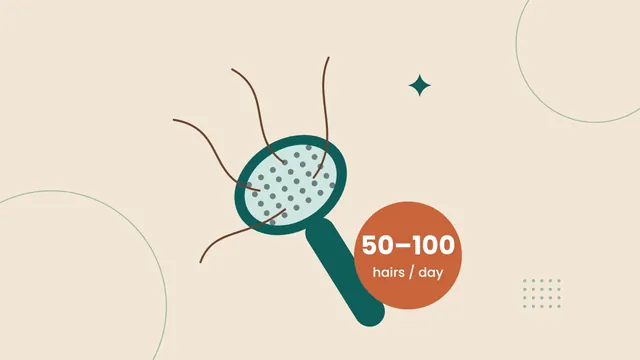
Yes. Washing collects hairs that have already shed since your last wash, so you'll always see some in the drain. The AAD says losing 50 to 100 hairs a day is normal. If you're worried, read how much hair loss is normal for the signs that mean it's worth seeing a dermatologist.
Frequently asked questions
How should you wash thin hair?
Apply shampoo to your scalp only, rinse well, then use conditioner on the ends only. Blot your hair dry with a towel or T-shirt instead of rubbing, and detangle gently with a wide-tooth comb.
Should thin hair be washed every day?
It depends on your scalp. The American Academy of Dermatology says people with straight hair and an oily scalp may need to wash daily. Many people with fine hair find washing daily or every other day keeps it looking fullest.
Should I use conditioner on thin hair?
Yes. Use conditioner after every wash, but if your hair is fine or straight, apply it only to the ends so your roots stay light and lifted.
Can washing your hair cause hair loss?
No. Washing doesn't cause hair loss; it simply rinses out hairs that have already shed since your last wash, which is why you see them in the drain.
What is the best shampoo for thin hair?
A lightweight or volumizing shampoo usually works best for thin hair, with a clarifying shampoo used occasionally to remove buildup. No shampoo can regrow hair.
Sources
Written by Shadush Sachiska
Shadush Sachiska is the founder and editor of 360 Hair Loss. Shadush researches every guide from dermatology sources and real-world styling advice to help readers with thinning hair look and feel their best. Shadush is not a doctor; health topics are written to help you have a better conversation with one.