Mature Hairline vs. Receding Hairline: How to Tell the Difference
Mature hairline vs receding hairline: a simple at-home self-check, a side-by-side diagram, and the signs that mean it's time to see a dermatologist.

Key takeaways
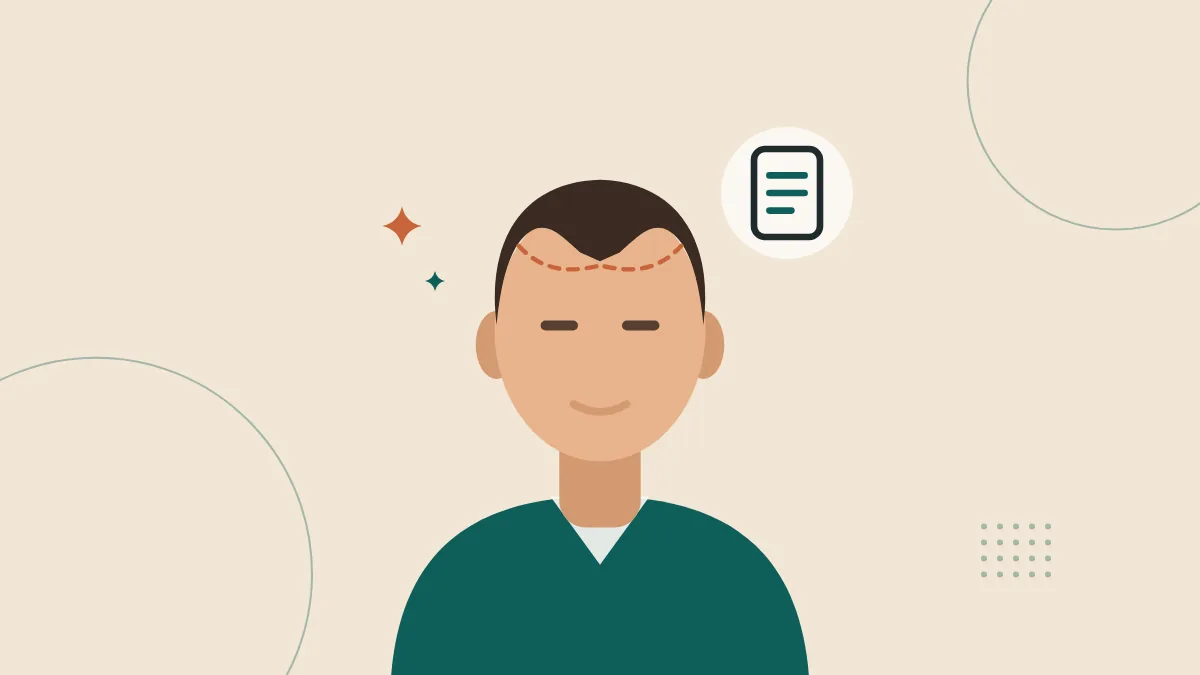
- A mature hairline moves up a little and evenly, then stops; a receding hairline keeps moving back, mostly at the temples.
- Most men's hairlines mature at some point in their late teens or twenties, and it's a normal change.
- Signs of receding: a deepening 'M' shape, thinning hairs along the front, and change that continues over months.
- Monthly photos in the same light are the most reliable way to tell the two apart.
- If your hairline is moving back quickly or you notice thinning on top too, see a dermatologist early.
In this article
The difference in mature hairline vs receding hairline comes down to how far the hairline moves and whether it keeps going. A mature hairline rises a little, evenly across the forehead, and then stays put; it's a normal change for most adult men. A receding hairline keeps moving back over months and years, usually much faster at the temples, creating a deepening "M" shape. Below is a simple self-check you can do at home, a side-by-side diagram, and the signs that mean you should talk to a dermatologist.
What is a mature hairline?
Many people are born with a low, fairly straight hairline, often called a juvenile hairline. For most men, and some women, the hairline moves up slightly at some point in the late teens or twenties. The corners at the temples may round off a little. This is a mature hairline, and it's part of normal adult change rather than hair loss.
Hair specialists often describe a mature hairline as sitting roughly a finger-width above the highest crease on your forehead when you raise your eyebrows. Treat that as a rough guide, not a rule: foreheads and hairlines vary a lot from person to person.
What is a receding hairline?
A receding hairline is the hairline moving back because of hair loss. The most common cause is hereditary hair loss, which the American Academy of Dermatology (AAD) calls the most common cause of hair loss worldwide. In men, the AAD says the first sign is often a receding hairline or a bald spot on top of the head, and the process can begin as early as the teens.
Doctors often describe men's hereditary hair loss using the Norwood scale, which runs from stage 1 (no recession) to stage 7 (extensive hair loss). A mature hairline usually sits around stage 1 to 2. Recession that keeps deepening at the temples moves into stage 2 and beyond.
Mature vs. receding hairline: side by side
| Mature hairline | Receding hairline | |
|---|---|---|
| Shape | Even, slightly higher line; soft corners | Deepening "M" or "V" at the temples |
| How far it moves | A little, then it stops | Keeps moving back over time |
| Speed | Slow, usually over a few years, then stable | Continues month after month |
| Hairs along the front | Normal thickness | Fine, short, wispy hairs |
| Rest of the hair | Unchanged | May also thin at the crown |
| Symmetry | Usually even on both sides | Often deeper on one side at first |
How to tell if your hairline is receding: a 5-step self-check
- Find an old photo. Look at a clear photo from a few years ago with your hair pushed back. Compare the shape and height of your hairline, especially at the temples.
- Do the forehead-crease check. Raise your eyebrows and note your highest forehead crease. A hairline that's moved well beyond a finger-width above it, especially at the temples, points toward recession.
- Look at the hairs along the front. In good light, check the very front of your hairline. Fine, short, wispy hairs that are thinner than the rest are an early sign of miniaturization, where follicles produce weaker hairs.
- Check both temples. Recession often starts on one side. A clear difference between the two sides is worth watching.
- Take monthly photos. Use the same mirror, light and angle once a month, with your hair pushed back. After three to six months, you'll know whether the line is stable or moving.
The monthly photo is the most important step. A mature hairline looks the same month to month; a receding hairline keeps changing.
Other signs that point to hair loss
- Thinning at the crown at the same time as the hairline is changing.
- A family history of hereditary hair loss on either side of the family.
- Your hair looking thinner overall when it's wet or under bright light.
- More scalp showing through the front when you style your hair forward.
Shedding alone isn't a reliable sign: everyone loses hair every day. Our guide on how much hair loss is normal explains why.
Can women have a receding hairline?
Yes, but it's less common. The AAD notes that the first sign of hereditary hair loss in women is usually overall thinning or a widening part rather than a receding hairline. Recession at the temples or hairline in women is often linked to tight hairstyles that pull on the roots; read hairstyles that cause hair loss. Other causes are possible too, so it's worth seeing a dermatologist.
What to do next
If your hairline is mature: nothing needs to change. Keep an eye on it with the occasional photo, and choose a cut you like. Most styles work well, including side parts and slick-backs.
If your hairline is receding:
- See a board-certified dermatologist early. Many types of hair loss respond best when they're addressed early, and a dermatologist can confirm the cause.
- Pick a haircut that suits it. Short, textured cuts styled forward make recession much less noticeable. See haircuts for a receding hairline.
- Try a fade. A low fade keeps the temples from looking deeper; see the fade haircut for thinning hair.
- Avoid tight styles such as top knots that pull the hairline back.
When to see a dermatologist
Book an appointment if your hairline is moving back noticeably within a few months, if you're also thinning at the crown, if hair is coming out in patches, or if your scalp is itchy, sore, red or scaly. These can point to hair loss that benefits from early diagnosis.
Frequently asked questions
What is the difference between a mature hairline and a receding hairline?
A mature hairline rises a little, evenly, and then stops; it's a normal adult change. A receding hairline keeps moving back over time, usually faster at the temples, because of hair loss.
At what age does a hairline mature?
For most men, the hairline matures sometime in the late teens or twenties. It moves up slightly and then stays stable.
How do I know if my hairline is receding?
Compare old photos, check for fine wispy hairs along the front, and take monthly photos in the same light. A hairline that keeps moving back over several months is likely receding.
Is a mature hairline the start of balding?
Not necessarily. A mature hairline is a normal change and often stays stable for years. Only continued movement, especially at the temples, suggests hair loss.
Can a receding hairline stop on its own?
A mature hairline stops on its own, but recession from hereditary hair loss usually continues. A dermatologist can explain your options, which tend to work best when started early.
Sources
Health information in this article is based on the cited dermatology sources and is not a substitute for advice from a doctor. How we research.

Written by Shadush Sachiska
Shadush Sachiska is the founder and editor of 360 Hair Loss. Shadush researches every guide from dermatology sources and real-world styling advice to help readers with thinning hair look and feel their best. Shadush is not a doctor; health topics are written to help you have a better conversation with one.