Hair Topper vs. Wig: Which Is Right for Thinning Hair?
Hair topper vs. wig: compare coverage, comfort, cost, upkeep and how natural each looks, so you can choose the right option for thinning hair or hair loss.

Key takeaways
- A hair topper covers part of the head and blends with your own hair; a wig covers the whole head.
- Toppers suit thinning on top or at the part when you still have plenty of hair around the sides.
- Wigs suit widespread thinning or significant hair loss, or when you want a complete change.
- Human hair looks most natural and can be heat-styled; synthetic hair is cheaper and holds its style.
- Getting the color, density and base size right matters more than the price.
In this article
In the hair topper vs. wig decision, the simplest rule is this: choose a topper if your thinning is mostly on top and you still have good hair around the sides and back, and choose a wig if thinning is widespread or you'd like full coverage. A topper adds hair where you need it and blends with your own; a wig replaces the look of all of it. This guide compares them on coverage, comfort, how natural they look, upkeep and cost.
What is a hair topper?
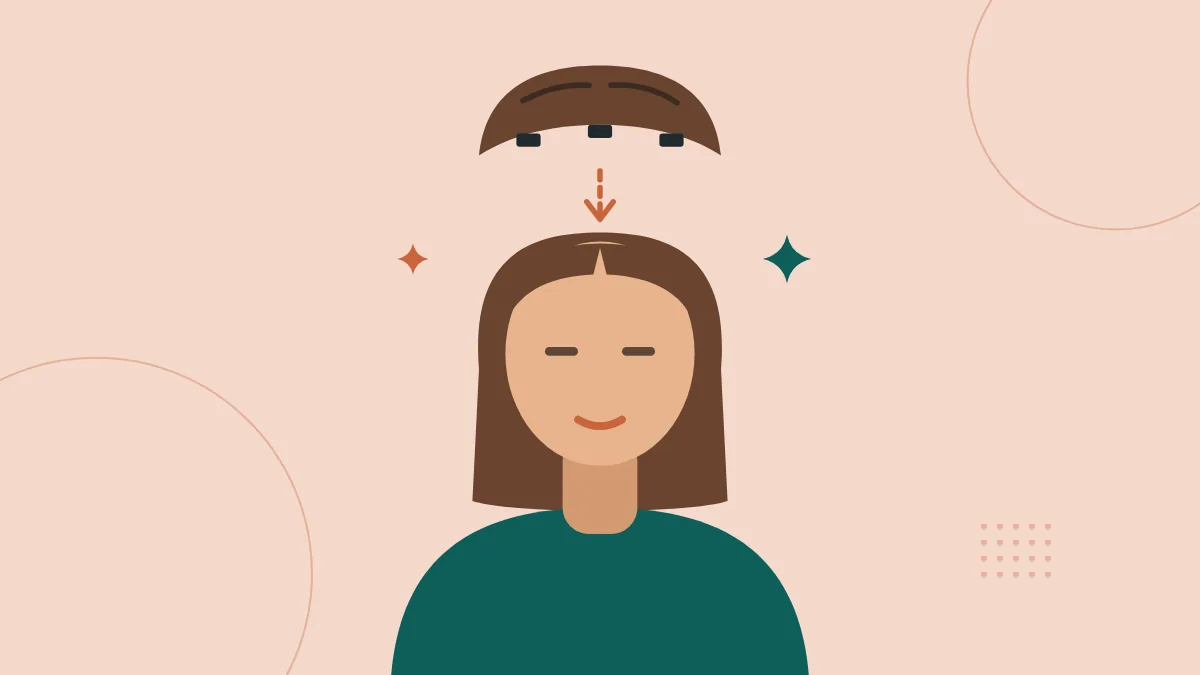
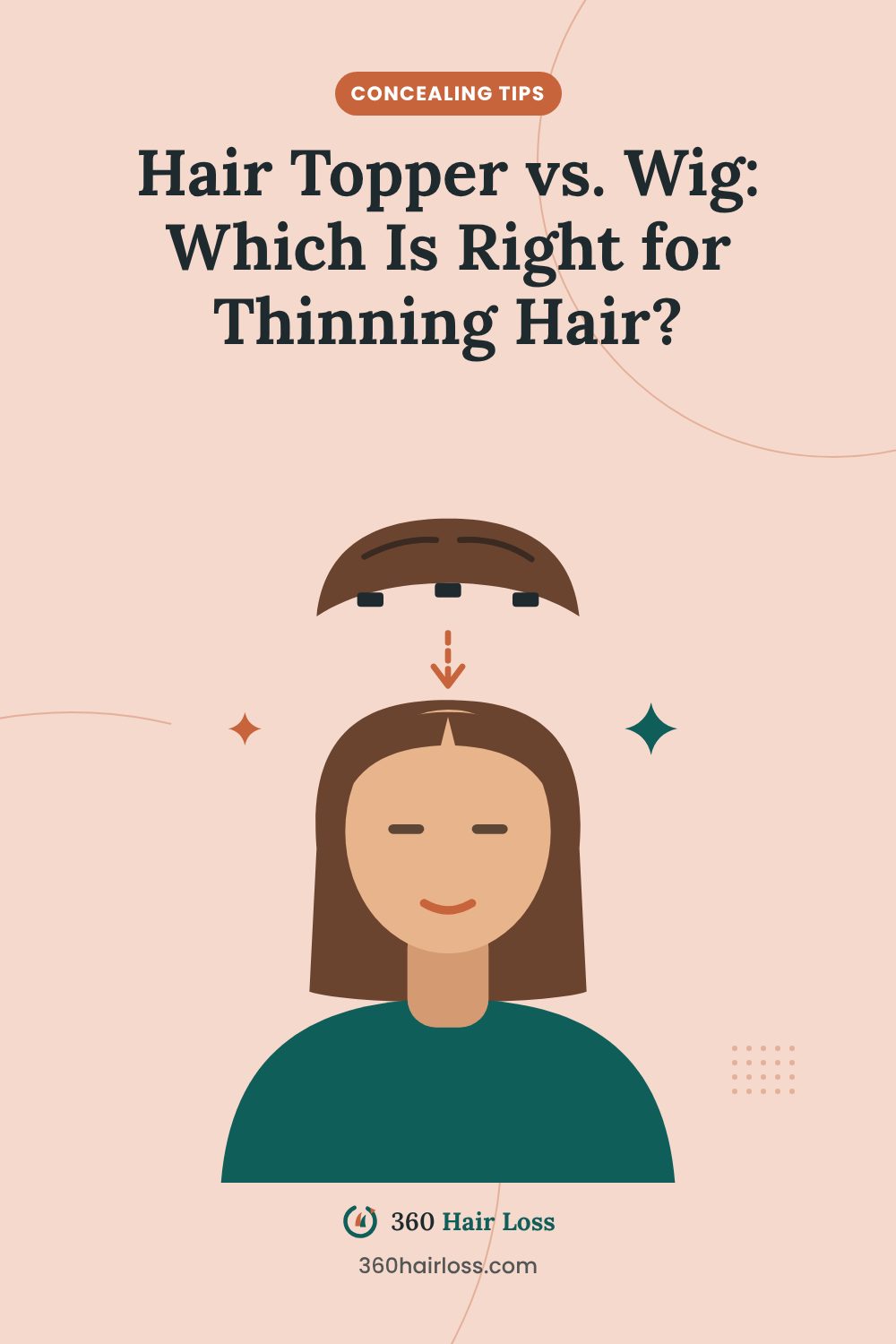
A hair topper (also called a hairpiece or top piece) is a partial piece of hair on a small base that clips onto your own hair. It sits over the part line or crown and your own hair is pulled through or around it, so the two blend together. Toppers come in different base sizes, from small pieces that cover a wide part to larger ones that cover most of the top of the head.
What is a wig?
A wig covers the entire head. It sits on a cap that is secured with combs, adjustable straps, clips, tape or adhesive. Because it doesn't rely on your own hair to blend in, a wig works whatever is happening underneath, which is why many people with significant hair loss prefer one.
Hair topper vs. wig: side-by-side comparison
| Hair topper | Wig | |
|---|---|---|
| Coverage | Part of the head (part line, top or crown) | Whole head |
| Best for | Thinning on top with healthy sides and back | Widespread thinning or significant hair loss |
| Blends with your hair | Yes, your own hair forms the sides and back | No, it replaces the whole look |
| Comfort | Light, small base, cooler to wear | Covers more scalp, can feel warmer |
| Attachment | Usually clips onto existing hair | Combs, straps, clips, tape or adhesive |
| Color matching | Must match your own hair closely | Any color you like |
| Typical cost | Usually lower, as there's less hair | Usually higher for the same hair quality |
Who should choose a hair topper?
- Your part is widening or you can see scalp on top, but the sides and back are still full.
- You want to keep your own hairstyle and color and simply add density.
- You'd like something light and quick to clip in each morning.
One thing to know: topper clips grip your own hair, so they need enough healthy hair where they sit. Clips placed in exactly the same spot every day can pull on the hair over time, so vary the position slightly and choose a base that spreads the weight. If your thinning is mild, styling may be enough on its own; see hairstyles for women with thinning hair on top.
Who should choose a wig?
- Thinning or hair loss affects most of your head.
- Your own hair isn't strong enough to hold clips.
- You want a different length, color or style from your natural hair.
- You want a style that looks the same every day with little effort.
Human hair vs. synthetic hair
Both toppers and wigs come in human or synthetic hair.
- Human hair looks and moves most naturally and can usually be heat-styled and colored, but it costs more and needs styling after washing, just like your own hair.
- Synthetic hair is more affordable and holds its style after washing, but it can look shinier and most synthetic fibers can't take heat from irons or dryers. Some heat-friendly synthetics are available.
For a topper that has to blend with your own hair, many people find human hair easier to match.
Tips for a natural look
- Match color in daylight, and match your roots as well as your ends.
- Choose realistic density. Very thick pieces look obvious; a density similar to your natural hair blends best.
- Get it cut in. A stylist can trim the topper or wig to frame your face, which makes a big difference.
- Pick the right base size for a topper: it should cover the thin area plus a little margin, no more.
- Try lace or mono tops, which mimic the look of a natural part and scalp.
For small areas, a cheaper first step is hair fibers, and for the crown specifically see how to hide a bald spot on the crown.
Care and upkeep
- Wash pieces gently with products made for wigs or hairpieces, usually every 10 to 20 wears or as the maker advises.
- Store toppers and wigs on a stand so they keep their shape.
- Keep your own scalp and hair clean underneath, and give your scalp time without a piece each day.
- Detangle carefully with a wide-tooth comb, starting at the ends.
Frequently asked questions
What is the difference between a hair topper and a wig?
A hair topper covers only part of the head, usually the top or the part, and blends with your own hair. A wig covers the whole head and replaces the look of your hair entirely.
Is a hair topper or a wig better for thinning hair?
A topper is usually better if thinning is mostly on top and the sides and back are still full. A wig is usually better if thinning is widespread or your hair can't hold clips.
Can a hair topper damage your hair?
Clips can pull on hair if they sit in exactly the same spot every day. Vary the position slightly, choose a base that spreads the weight, and give your hair breaks.
Do hair toppers look natural?
A well-matched topper can look very natural, especially in human hair with a lace or mono top. Color match, realistic density and a stylist's cut make the biggest difference.
Are toppers cheaper than wigs?
Usually, yes. Toppers use less hair than a full wig, so a topper is generally less expensive than a wig of the same hair quality.
Written by Shadush Sachiska
Shadush Sachiska is the founder and editor of 360 Hair Loss. Shadush researches every guide from dermatology sources and real-world styling advice to help readers with thinning hair look and feel their best. Shadush is not a doctor; health topics are written to help you have a better conversation with one.